Dynamic Vapor Sorption (DVS): Understanding How Moisture Affects Plastics and Packaging Performance
Moisture is a common—and often underestimated—variable in material performance. A plastic resin can pick up water before processing. A food product can gain or lose moisture during storage. A spool of 3D-printing filament can arrive dry but become difficult to process after prolonged exposure to humid air. In each case, the practical question is the same: how does the material interact with moisture, and what can be done to manage that interaction?
Dynamic Vapor Sorption (DVS) provides a detailed way to answer that question. By measuring extremely small changes in sample mass under carefully controlled humidity conditions, DVS helps characterize how materials take up and release moisture over time. For manufacturers and packaging developers, that insight can inform material selection, processing conditions, storage practices, and moisture-barrier requirements.
What Is Dynamic Vapor Sorption?
DVS is a gravimetric testing technique: it tracks a sample’s weight as the surrounding relative humidity changes, typically while temperature is held constant. A small sample is placed on a highly sensitive balance inside a controlled test environment. The instrument exposes it to selected humidity levels—for example, progressively increasing the relative humidity and then decreasing it—and records the resulting mass changes.
As humidity rises, a moisture-sensitive material may gain weight as it takes up water. As humidity falls, it may lose weight as that moisture is released. The resulting data show both how much water a material can take up under the selected conditions and how quickly it responds to changes in humidity.
There are several related terms worth distinguishing. Adsorption describes molecules accumulating at a material’s surface; absorption refers to molecules entering its bulk. Sorption is the broader term covering either process, while desorption describes their release. DVS tracks the overall mass response, but separating individual mechanisms may require additional analysis.
What Can DVS Results Tell Us?
Two especially useful outputs are moisture sorption curves and sorption/desorption isotherms. A mass-versus-time curve shows the rate at which a sample gains or loses weight after a humidity change. An isotherm shows the moisture associated with each humidity level at a given temperature, typically after the sample approaches equilibrium.
These results may reveal whether a material absorbs moisture rapidly, whether it continues to gain moisture at higher humidity, and how effectively it releases that moisture when conditions become drier. In some materials, the sorption and desorption curves follow different paths, a behavior known as hysteresis. This can provide clues about the material’s interaction with water and whether its response depends on previous humidity exposure.
Importantly, DVS does not by itself establish the exact moisture level at which a product will fail or become unprocessable. That practical limit must be determined using relevant processing or performance tests. DVS can then help relate the limit to humidity exposure and time.
Why Moisture Matters for Plastics and Engineered Materials
Different polymers respond to moisture in different ways. Some plastics are relatively resistant to moisture uptake, while others—including certain nylons, polyesters, and specialized or biodegradable formulations—require more careful moisture management. Water in a resin can affect processing behavior and, depending on the material and conditions, contribute to defects or changes in properties.
This is especially relevant before extrusion and other heat-based manufacturing operations. Manufacturers often need to dry moisture-sensitive resin to an appropriate level before processing. DVS helps build a more complete picture of how quickly a particular formulation takes up moisture at different humidity levels and how it behaves during drying or subsequent exposure.
A Real-World Example: Moisture-Sensitive 3D-Printing Filament
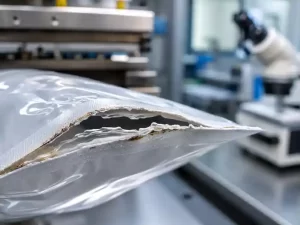
Consider the growing market for engineered 3D-printing filament. A manufacturer may package filament spools in a moisture-barrier bag, often with a desiccant, so the product remains dry before first use. But what happens after the customer opens the package, prints a few parts, and leaves the remaining spool exposed?
For a moisture-sensitive filament, water absorbed from the air can create problems when the material is heated and extruded. Depending on the resin, symptoms may include popping or sputtering at the nozzle, bubbles or voids, and inconsistent printed-part quality. Keeping unused filament dry—or re-drying it when appropriate—can be essential.
The useful question is not merely whether a filament can absorb water. It is how rapidly that specific formulation absorbs moisture under particular conditions, and whether the exposure could eventually exceed a processing limit. DVS data can help a filament supplier evaluate those exposure patterns and develop more defensible handling and storage guidance.
A recommendation such as “re-dry after extended exposure” becomes more meaningful when it is supported by material-specific measurements rather than a rule of thumb. Actual allowable exposure times, however, require testing of the resin under representative conditions; they cannot be assumed to be the same across all filaments.
Connecting Material Behavior to Packaging Design
The same principles matter when choosing a protective package. Moisture-sensitive foods, pharmaceutical products, and industrial materials must often remain within an acceptable moisture range during distribution and storage. To select a suitable package, engineers need to understand both the product’s sensitivity to moisture and the protection afforded by the packaging structure.
That is where DVS can complement water vapor transmission rate (WVTR) testing. DVS characterizes how the product or material responds to moisture exposure. WVTR testing evaluates the rate at which water vapor passes through a packaging film or structure under defined test conditions. These are different questions, and both can matter.
For example, knowing that a dry, crisp food is highly sensitive to moisture uptake may support the use of a stronger moisture barrier. A different product may have greater tolerance, allowing engineers to evaluate a less demanding—and potentially more economical—film structure. In either case, the goal is not automatically to specify the highest possible barrier. It is to match packaging performance to the product’s actual requirements.
How Does DVS Compare With Other Moisture Tests?
DVS is one tool within a broader moisture-testing toolbox. Karl Fischer titration is a chemical method used to determine water content in a sample. Relative-humidity-based methods can help evaluate moisture conditions or estimate water activity or content when properly calibrated for a particular application. Loss-on-drying instruments measure mass lost during heating, which may include substances other than water if other volatile compounds are present.
These methods should not be viewed as a simple hierarchy in which one universally replaces the others. Karl Fischer testing can answer “How much water is present?” DVS addresses “How does this material take up and release moisture as humidity changes?” Selecting the right method depends on the problem being investigated, the sample, and the decision the data must support.
Better Moisture Data, Better Decisions
Moisture-related problems do not begin and end with the packaging film. Product formulation, resin condition, manufacturing processes, storage environment, and packaging design all interact. Understanding those interactions can help engineers move from general assumptions about moisture sensitivity to material-specific evidence.
Dynamic Vapor Sorption adds important detail to that picture. Whether the challenge involves moisture-sensitive plastic resin, partially used 3D-printing filament, or a product that must remain stable inside a flexible package, DVS can provide insight into how a material behaves as humidity changes. Combined with appropriate moisture-content, barrier, and performance testing, that information supports better-informed decisions about processing, protection, and material selection.
How Flex-Pack Engineering Can Help
Understanding how moisture interacts with your materials is essential to developing reliable, high-performance products and packaging. At Flex-Pack Engineering, we combine advanced analytical testing with decades of polymer and flexible packaging expertise to help manufacturers identify moisture-related challenges and make informed engineering decisions. Whether you’re evaluating the moisture sensitivity of a new resin, investigating processing problems, or determining the barrier requirements for a flexible packaging structure, our team can help you interpret the data and develop practical solutions. Contact Flex-Pack Engineering today at 888-300-1482 to learn how our testing and consulting services can help improve material performance, protect your products, and reduce costly failures.