Cost vs. Performance: A Guide to Selecting the Right Flexible Film Structure
In the flexible packaging industry, the ultimate goal is to find the perfect intersection between material cost and product protection. It is a delicate balancing act. On one side of the scale is the need to protect the product throughout its entire lifecycle; on the other is the pressure to maintain tight profit margins and meet sustainability goals.
When selecting a film structure, companies often fall into one of two costly traps: over-engineering or under-engineering. Understanding the difference—and knowing how to find the optimal middle ground—is critical for your bottom line and your brand reputation.
The Hidden Costs of Over-Engineering
Over-engineering occurs when a package is designed with barrier properties, physical strength, or layers that far exceed the actual requirements of the product. While an over-engineered package rarely fails in the field, it quietly erodes profit margins day after day.
Common signs of over-engineering include:
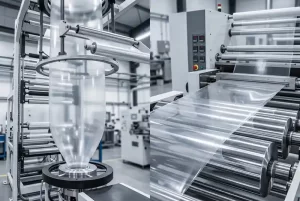
- Excessive Layers: Using a complex 7- or 9-layer coextrusion for a product that does not require an absolute oxygen or moisture barrier.
- Unnecessary Down-Gauging Resistance: Over-specifying puncture resistance for a product that is lightweight and lacks sharp edges.
- Shelf-Life Mismatch: Paying for high-barrier foil laminates designed for a two-year shelf life when the product consistently turns over in the supply chain within three months.
The consequence of over-engineering is not just the inflated cost of raw materials. Thicker, more complex films often weigh more (increasing shipping costs) and can complicate sustainability initiatives by making the package harder to recycle.
The Severe Liabilities of Under-Engineering
On the opposite end of the spectrum is under-engineering—stripping away layers, switching to cheaper resins, or down-gauging too aggressively without rigorous validation. While the immediate reduction in material costs looks attractive on a spreadsheet, the long-term liabilities can be devastating.
The true cost of under-engineering is realized downstream in the form of:
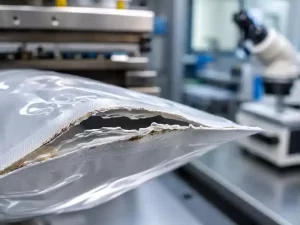
- Seal Failures and Leaks: Insufficient sealant layers or poor hot-tack strength can lead to bags popping open during transport or failing on high-speed vertical form-fill-seal (VFFS) lines.
- Compromised Shelf Life: A slight drop in Oxygen Transmission Rate (OTR) or Moisture Vapor Transmission Rate (MVTR) performance can lead to premature spoilage, stale products, and widespread consumer complaints.
- Brand Damage: Ultimately, the consumer does not know how much you saved on resin; they only know that the package they purchased was defective.
Under-engineering turns packaging from a protective asset into a massive liability, where the cost of a single product recall will instantly wipe out a year’s worth of material savings.
Finding the Optimized Structure: “Fitness for Use”
Avoiding both extremes requires a precise, scientific approach to packaging design. The goal is an optimized film structure that is precisely matched to the product’s specific Fitness for Use (FFU) requirements.
This optimization process requires empirical data. It involves mapping the exact life cycle ,Chain Of Use (COU) stresses the package will face, determining the non-negotiable barrier requirements, and then engineering a film formulation that hits those targets efficiently—no more, no less.
How Flex-Pack Engineering Can Help
Navigating the fine line between cost and performance is not something you should leave to guesswork or biased supplier recommendations. You need an independent expert to evaluate your flexible packaging structures.
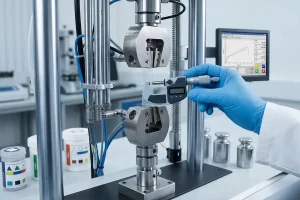
Flex-Pack Engineering offers the unbiased analytical and physical testing required to optimize your packaging. We can deconstruct your current film, identify areas where you are overpaying for unnecessary performance, and ensure that any cost-saving modifications (like down-gauging or material substitution) will not leave you vulnerable to field failures.
Whether you need reverse engineering, complete FFU validation, or expert consulting on custom polymer compounding, our state-of-the-art testing facility is ready to assist.
Contact Flex-Pack Engineering today at 888-300-1482 to start engineering smarter, more profitable flexible packaging.